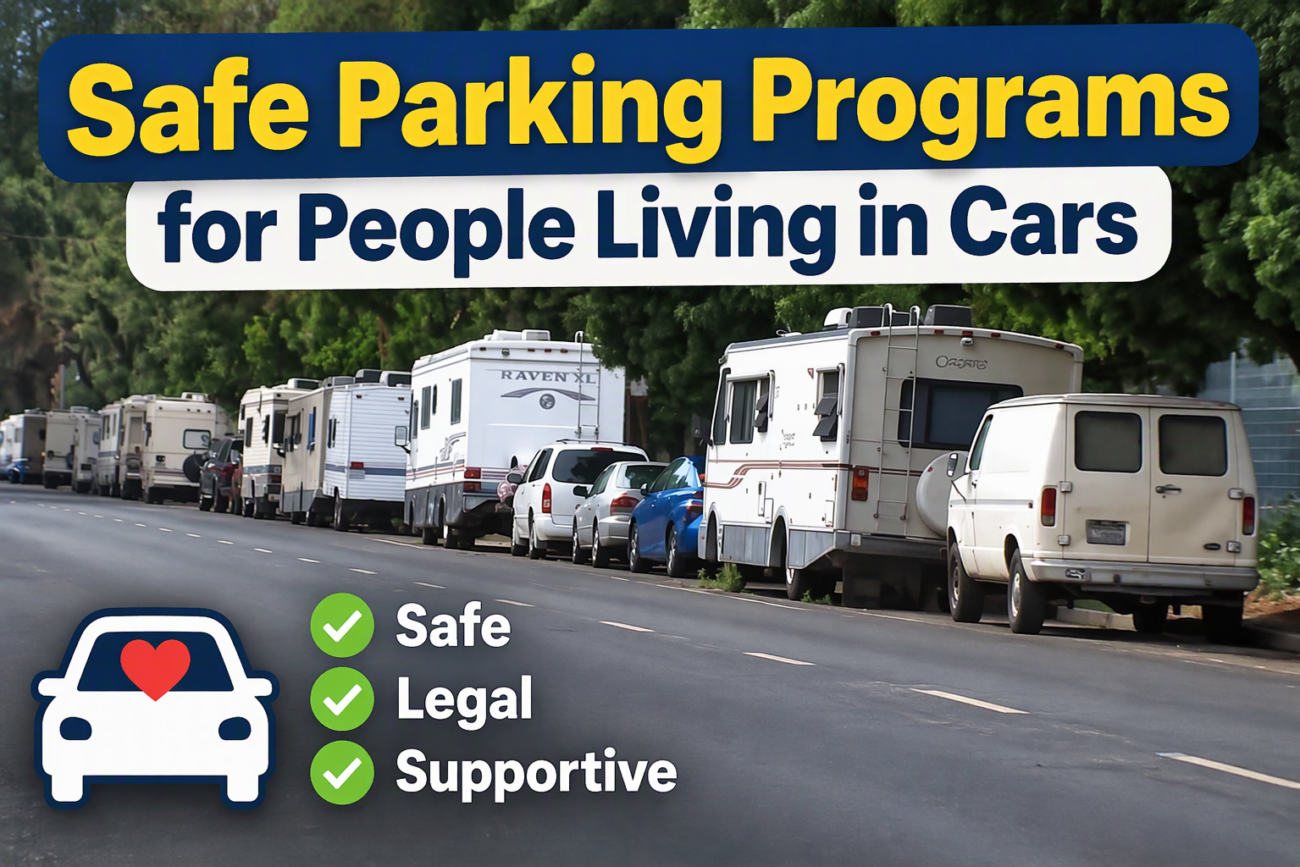
Safe parking programs offer designated, legal, and protected spaces where individuals living in their cars or recreational vehicles (RVs) can spend the night without fear of police harassment, fines, or having their vehicles impounded. Managed by municipalities, non-profit organizations, and religious groups, these spaces serve as a bridge toward permanent housing while also protecting the individual’s vehicle.
What do these programs offer?
Safe parking programs provide a protected, legal place to spend the night, along with a range of comprehensive social services designed to assist individuals in their transition to permanent housing. More than just parking lots, these sites function as shelters on wheels with minimal entry requirements.
Below are the features typically offered by established programs:
Safety and legal protection
Protection from fines and towing: The primary benefit is exemption from fines for overnight parking, police intervention, and vehicle impoundment, allowing residents to sleep without disruption.
Controlled access: These spaces are generally located on fenced-in properties—owned by churches, municipalities, or non-profit organizations—that feature gates that are locked after a set time.
On-site staff: Most programs have staff—such as overnight security guards, mediators, or resident advisors—responsible for ensuring that quiet-hour rules are followed and that everyone feels safe.
Well-lit areas: The sites feature exterior lighting and clearly marked parking spaces, ensuring that each vehicle has sufficient personal space.
Basic hygiene and daily needs
Access to sanitation facilities: These sites provide 24-hour access to clean portable toilets, ADA-compliant accessible units, or restroom facilities located within churches or other buildings. Hygiene and laundry: Many locations partner with mobile shower units (such as ShowerUp or LavaMaeˣ) and mobile laundry services that visit the site weekly; they may also provide vouchers for local laundromats or community centers.
Waste management: Programs include regular trash collection, waste bins, and—in the case of spaces designated for recreational vehicles (RVs)—periodic emptying of wastewater tanks (black and gray water).
Food and water: Residents typically have access to potable water, hot evening meals, or quick breakfasts prepared by volunteers from religious groups, as well as communal microwaves or coffee stations.
Electricity and Wi-Fi: Some locations offer outdoor charging stations for phones and medical devices (such as CPAP machines), as well as access to free public Wi-Fi.
Housing guidance and case management
Dedicated case management staff: Social workers visit the sites regularly to help residents complete housing assessments (such as the “Coordinated Entry” process) and apply for housing vouchers or rapid rehousing funds.
Document recovery: Staff assist in the process of replacing lost identification documents, birth certificates, and Social Security cards—all of which are required to apply for housing or secure employment.
Enrollment in benefit programs: Case managers help participants enroll in programs such as SNAP (food stamps), Medicaid, and SSI/SSDI, and assist them in obtaining local aid for utility payments or rental deposits.
Vehicle and Employment Support
Vehicle maintenance vouchers: Since a functional vehicle is often a person’s only shelter and their means of accessing employment, many programs offer small grants for urgent repairs, new tires, jump-starts (battery assistance), or the renewal of vehicle registration and insurance.
Job readiness: These programs often connect participants with professional development agencies and resume-writing workshops, and they provide appropriate attire for job interviews.
Storage options: Some sites—especially those that operate 24 hours a day or have larger capacity—offer small lockers or storage bins, so that residents do not have to keep all their belongings piled up inside their vehicles.
Pet accommodations: Unlike many traditional congregate shelters that prohibit animals, almost all safe parking programs allow residents to keep their pets in their vehicles; they often even provide free pet food and leashes.
Typical participation requirements
Most safe parking programs require an initial assessment, valid vehicle documentation, and a commitment to follow the site’s safety rules. Although these sites aim to be “low-barrier” alternatives (with fewer entry requirements) compared to congregate shelters, administrators establish basic rules to protect residents and maintain the support of the surrounding community.
Here is what programs typically request during the enrollment process:
Vehicle and driver documentation
Functional vehicle: Most sites require the car, van, or recreational vehicle (RV) to be roadworthy, so that it can enter and exit the site daily; this is especially important for locations that operate only at night, where vehicles must be removed each morning.
Valid driver’s license: Generally, at least one person staying in the vehicle must hold a current, valid driver’s license. Registration and insurance: Programs typically require up-to-date vehicle registration and, at a minimum, liability insurance. Note: If these documents have expired, many programs offer a grace period of 30 to 60 days and provide assistance with renewal costs.
Admission and assessment process
Application and interview: A brief intake interview with a case manager or outreach worker is generally conducted to verify that the individual is currently experiencing homelessness and residing in their vehicle.
Background checks: Policies vary by program administrator. Generally, “low-barrier” sites do not conduct comprehensive criminal background checks; however, almost all check national sex offender registries—especially when the site is located near schools, parks, or churches. Local ties: Some city- or county-funded programs prioritize individuals who already reside or work in the area, or who have established ties to the locality.
Site rules and code of conduct
Access and quiet hours: Overnight parking sites typically enforce strict arrival windows (e.g., 7:00 p.m. to 9:00 p.m.), close their gates for the night, and require vehicles to vacate the premises by a specific time in the morning (often 6:00 a.m. or 7:00 a.m.).
Storage of belongings: To maintain site cleanliness and comply with local zoning regulations, all personal belongings must be kept inside the vehicle or in storage containers provided by the program; generally, tents, tarps, and outdoor furniture are not permitted.
Policies on substances and behavior: The consumption of alcohol, the use of illegal drugs, the possession of weapons, the lighting of fires (including camping stoves or generators), and any disruptive or threatening behavior are strictly prohibited on the premises.
Prohibition of unauthorized visitors: Only registered household members and approved pets are permitted in the assigned space.
Program participation: Although many programs follow a “housing-first” model—which does not require sobriety or employment—most do require that you meet periodically with a case manager to work toward securing stable housing.
How to find a safe parking program
Because most safe parking sites keep their exact locations confidential for the safety of their residents, you generally need to go through a coordinated entry system or a local assistance agency, rather than showing up directly at the site.
Here are the most reliable ways to find an available space and request access:
Call or text 2-1-1 (Coordinated Entry System)
How it works: By dialing 2-1-1 (or visiting 211.org), you will be connected directly to your local “Continuum of Care” (CoC) and the intake line for the Coordinated Entry System.
What to ask: Specifically request information regarding “assistance for people living in vehicles” or “referrals to safe parking programs.” If the safe parking sites in your area are full, 2-1-1 operators can add you to a priority waiting list and connect you with street outreach teams, who distribute items such as fuel cards, hygiene kits, and vouchers for emergency shelters.
Consult national directories for safe parking
There are two major national organizations that maintain up-to-date, state-by-state lists of active programs. These include phone numbers for intake, as well as details regarding vehicle restrictions (for example, whether they accommodate recreational vehicles or motorhomes):
Vehicle Residency Collective: Consult their “National Parking Program List” to find verified municipal and non-profit-run programs across the United States.
Homes 4 The Homeless: Explore their “Safe Parking Directory” to find regional contacts and support groups.
Contact religious organizations or coalitions that assist people experiencing homelessness directly
Many safe parking programs operate in the parking lots of local churches or missions, which manage their own intake processes independently of county-run systems.
In the Philadelphia/Southeastern Pennsylvania area: Contact Saint Miriam Parish in Flourtown, Pennsylvania (which runs the “Car Safe” overnight program), or the Berks Coalition to End Homelessness in Reading, Pennsylvania (which operates a safe parking lot for this purpose). You can also reach out to the Philadelphia Office of Homeless Services (OHS) helpline at 215-232-1984 for immediate assistance and referrals to other resources.
In the Milwaukee area: Contact IMPACT 2-1-1 (dial 2-1-1 or text your ZIP code to 898-211) to connect with the “Milwaukee Continuum of Care” (a network of services for people experiencing homelessness), or reach out to local street outreach organizations—such as Street Angels Milwaukee Outreach or Guest House of Milwaukee—to inquire about current options for vehicle-based shelter and available safe parking locations.
Consult with local police (via their non-emergency lines) or social service centers
Police officers specializing in homelessness: Many municipal police departments have officers dedicated to crisis intervention or assisting people experiencing homelessness. They are often aware of which local churches or non-profit-owned properties legally permit overnight stays in vehicles, as well as which streets should be avoided due to strict enforcement and the issuance of citations.
Day centers and soup kitchens: Visiting a day center or a food bank in person is often the fastest way to connect with a street outreach social worker, who can conduct an initial assessment on the spot.
Temporary Alternatives While You Wait
While you wait for a spot to become available in a safe parking program, your best temporary options include 24-hour travel centers, state highway rest areas, and certain commercial parking lots that allow overnight stays. Since local ordinances vary significantly, the key to avoiding fines or being woken up by the police during the night is to change locations daily and keep a low profile.
Below is a practical guide on where to park temporarily and how to stay safe:
Best Places for Temporary Parking
Truck stops and highway travel centers: Chains such as Pilot, Flying J, Love’s, and TA (TravelCenters of America) are designed for travelers who need to stay overnight. They feature good lighting, security cameras, and restrooms accessible 24/7. Park in the area designated for passenger vehicles or recreational vehicles (RVs)—never in lanes reserved for semi-trucks—and limit your stay to a single night. State highway rest areas: Most state-run rest areas allow drivers to sleep in their vehicles for a short period, though rules vary by state:
Pennsylvania: PennDOT rest areas generally allow short-term stops (officially up to 2 hours; however, overnight stays in passenger vehicles are often tolerated, provided it does not constitute camping).
Wisconsin: WisDOT rest areas allow travelers to stop and rest, but camping or remaining on-site for more than 24 hours is prohibited. 24-hour gyms: If you have a membership at a low-cost gym (such as Planet Fitness or Anytime Fitness), many of their 24-hour locations allow members to park their vehicles on-site overnight. As an added benefit, you will have access to showers, restrooms, and Wi-Fi.
Hospital visitor parking lots: Large, 24-hour hospitals have frequent shift changes and receive visitors around the clock, making it easy for a parked vehicle to go unnoticed. Note: Check the signage carefully to see if the parking area requires payment or if there are strict rules limiting its use exclusively to patients.
Selected commercial establishments (check first): Although corporate policies have become stricter, some Cracker Barrel, Walmart, and Cabela’s locations still allow overnight parking for self-contained vehicles (those equipped with their own basic amenities). Always go inside the establishment and ask the manager on duty for permission before settling in.
Essential habits for “discretion” and safety
Arrive late, leave early: Park after 9:00 p.m. or 10:00 p.m.—when businesses close or traffic dies down—and depart before 6:00 a.m. or 7:00 a.m., before the morning rush begins.
Change locations each night: Never park in the exact same spot two nights in a row. Rotating between 4 or 5 different locations prevents neighbors or security personnel from suspecting that the vehicle has been abandoned or that someone is living in it.
Cover your windows: Use custom-cut black foam panels, reflective sunshades, or blackout curtains on all windows. Blocking light from escaping prevents passersby from seeing inside and helps keep the interior warmer in cold weather.
Keep the exterior clean: Do not leave trash bags, coolers, chairs, or clothing outside your vehicle. Ensure your vehicle registration is up to date and that all lights are functioning properly; this way, the police will have no reason to run your license plate.
Stay safe in cold weather: As temperatures drop in November, avoid leaving the vehicle’s heater running all night; this consumes fuel, draws attention, and carries a risk of carbon monoxide poisoning if snow or debris blocks the exhaust pipe. Instead, use several layers of thermal clothing and a sleeping bag suitable for sub-zero temperatures, and leave a window slightly ajar to reduce condensation and allow for fresh air circulation.
Immediate local resources (if temperatures drop)
If you are in the Philadelphia area and need shelter or a warm place to stay tonight, call the Philadelphia Homeless Outreach Hotline at 215-232-1984 (available 24 hours a day, 7 days a week). During periods of sub-zero temperatures (“Code Blue”), the city opens additional shelters and relaxes the requirements for accessing shelter services.
