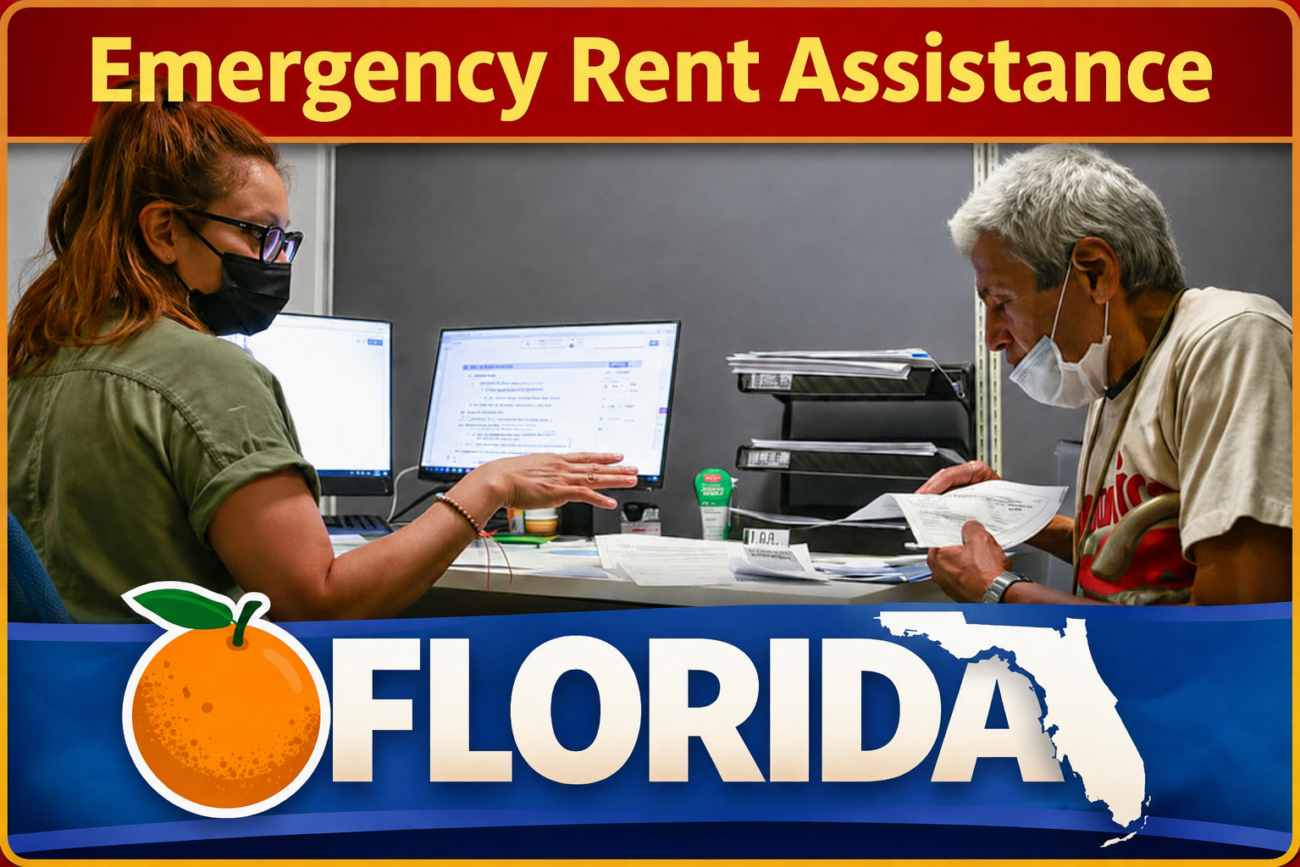
If you are having trouble paying rent in Florida, you may be able to get help through local government programs, housing agencies, non-profit organizations, and federal housing programs. Some programs help prevent eviction, while others offer long-term rental assistance or help individuals who are already experiencing homelessness.
It is important to know that Florida does not currently have a single statewide emergency rental assistance program available to all residents. Many rental assistance programs are administered by counties and cities. The Florida Housing Finance Corporation provides funding and guidelines for these programs, while local governments decide how their own programs operate.
General statewide resources
2-1-1 Referral Service: Call 211 or visit 211.org to contact your local call center. This service connects residents with active local churches, charitable organizations, and county-specific funds that currently have resources available.
HUD Housing Counselors: Call 1-800-569-4287 or use the HUD local office locator tool to get guidance on housing stability and local counseling services.
State Housing Initiatives Partnership (SHIP) Program: Administered through the Florida Housing Finance Corporation; local municipalities receive funds for rental and utility assistance, subject to availability.
Regional and County Programs
Since programs open and close quickly based on available funding, please check your specific local government portal:
Tampa
The City of Tampa currently administers the Rental and Moving Assistance Program (RMAP), which offers financial aid specifically for moving costs, up to a maximum of $10,000 per eligible household.
Applications for the current phase (Phase X) are accepted online only on Tuesdays from 9:00 a.m. to 12:00 p.m., or until the weekly limit is reached. City of Tampa RMAP program details
The program’s current phase is very specific and establishes strict criteria for applicants:
Covered expenses: First month’s rent, last month’s rent, security deposits, and administrative fees. It does not cover application fees or cleaning costs.
Key requirements:
The rental property must be located within the official City of Tampa limits (you can verify if your address is valid via the City of Tampa’s “Phase X” portal).
You must have a confirmed move-in date within the next 45 days. Households must demonstrate stable income of up to 140% of the Area Median Income (AMI).
Applicants must not have previously received funds from the RMAP program.
How to apply: Applications are processed exclusively through the City of Tampa’s RMAP portal. In-person or paper applications are not accepted.
Section 8/HCV Support: Voucher holders may apply for the benefit, but RMAP will only cover the security deposit portion (up to the equivalent of two months’ rent).
Contact line: For updates or inquiries regarding your application, call the Housing Information Line at 813-307-5555 (Monday through Friday, 9:00 a.m. to 3:00 p.m.).
Other programs in Tampa and Hillsborough County
If you do not meet the city residency requirement or need help preventing eviction rather than assistance with moving, consider these local organizations:
Tampa Housing Authority: Administers Section 8 Housing Choice Vouchers (HCV) and project-based rental assistance. The main office is located at 5301 West Cypress Street.
Metropolitan Ministries: Offers emergency rent and mortgage assistance to families facing eviction with incomes at or below 80% of the AMI. You can contact them at 813-209-1000 or visit their facility at 2002 N. Florida Ave.
Catholic Charities (Diocese of St. Petersburg): Provides rapid re-housing services and emergency financial assistance for past-due rent.
Salvation Army – Tampa Area Command: Frequently opens seasonal funds for crisis assistance regarding utility bills and past-due rent.
Orange County / Orlando
In Orange County and the city of Orlando, the general pandemic-era Emergency Rental Assistance Programs (ERAP) have closed; however, immediate, localized rental assistance remains available through the municipal Crisis Assistance Program and regional non-profit organizations.
To receive direct government assistance, your household must undergo an initial telephone screening to schedule an intake appointment.
1. Orange County Crisis Assistance Program
This is the primary active government program for county residents (including those living within Orlando city limits) facing sudden financial hardship. It offers a one-time emergency payment made directly to landlords to prevent eviction.
How to apply: Applications cannot be submitted online. You must call 407-836-6500 to be screened by a caseworker.
Phone hours: Lines are open Monday through Friday, 8:30 a.m. to 12:00 p.m. and 1:30 p.m. to 4:00 p.m. Appointments are scheduled strictly on a first-come, first-served basis.
Core Qualifications:
- You must be a legal resident of Orange County for at least 90 consecutive days.
- You must present a formal late-payment notice or an eviction notice issued by your landlord.
- You must provide proof of a specific, unforeseen emergency (e.g., medical emergency, job loss, major and sudden car repair) that caused the missed payment.
- You must show proof of household income for the last 60 days to demonstrate that a one-time payment will stabilize your housing situation moving forward.
Required documents: If your interview at the Michigan Street office is approved, you will need to bring physical copies of official IDs for all adults, Social Security cards for all household members, bank statements from the last 60 days, and your current lease agreement.
- Community and non-profit rental assistance programs
If you do not meet the county’s strict crisis criteria, these local organizations have ongoing funds available for rental assistance:
Christian Service Center: Offers up to $1,000 in one-time rental assistance to Orange County residents. To qualify, you must currently have active income, your monthly expenses must be lower than your income, and you cannot owe more than one month’s rent. Applications must be submitted via the Christian Service Center portal.
The Salvation Army (Bithlo and Orlando locations): Manages emergency rental and mortgage assistance linked to mandatory case management services. They specifically require proof of an unexpected interruption in income that occurred within the last 30 days. Appointments can be scheduled online via The Salvation Army of Central Florida portal.
Catholic Charities of Central Florida: Administers a Family Stability Program that covers past-due rent for families with minor children. You can complete an initial assessment application via the Catholic Charities financial assistance webpage.
3. Long-term subsidized housing
Orlando Housing Authority (OHA): Manages approximately 4,600 “Section 8 Housing Choice” vouchers throughout the city. The waiting list opens for applications periodically. You can check for waiting list updates on the Orlando Housing Authority portal or visit their office at 390 North Bumby Avenue.
Osceola County
In Osceola County, emergency rental assistance is strictly divided by geographic location: residents within the Kissimmee city limits must apply directly through the city, while residents of unincorporated county areas and St. Cloud are served by the county’s own programs. Before contacting any local agency, you should calculate your exact monthly income and total expenses, as staff will need this basic information to process your application.
- Government programs administered by the county
If you reside in St. Cloud or in unincorporated areas of Osceola County (outside the Kissimmee city limits), you are eligible for programs managed by the Osceola County Office of Housing and Community Services:
Emergency Rental Assistance (CDBG): Covers up to two or three months of past-due rent—paid directly to the landlord—to bring your account fully up to date. If you owe an amount greater than what the grant covers, you must pay the difference yourself before the county disburses the funds. To apply, contact staff by calling 407-742-8414 or emailing rentalhelp@osceola.org.
Tenant-Based Rental Assistance (TBRA): Offers ongoing rental subsidies for up to 24 months, along with case management, for households experiencing homelessness or at imminent risk of losing their housing. The application period opens periodically online; You can check the enrollment dates on the Osceola County TBRA program website.
SHIP Move-in Deposit Program: Helps cover security deposits and utility deposits. To qualify for this program, you must obtain a written referral from a case manager at a local non-profit organization and complete a mandatory financial education course provided by the UF/IFAS Extension office in Osceola County.
- City of Kissimmee Eviction Prevention Assistance
If your rental property is located directly within the Kissimmee city limits, you are excluded from the county’s general fund and must use municipal resources:
The process: You must complete an online pre-qualification assessment via the City of Kissimmee’s Eviction Prevention Portal. If you pass the initial questionnaire, staff will schedule an in-person intake meeting at Kissimmee City Hall.
Required documents: You must present a valid driver’s license, the complete lease agreement, and proof of payment and bank statements from the previous two months.
Contact line: To check the status of funds or ask questions about the application, call 407-518-2156.
- Nonprofit crisis funds
When government funds are exhausted or your income slightly exceeds established limits, local charitable organizations offer community assistance:
The Salvation Army – Osceola County: Located at 700 Union Street, this center offers direct financial assistance for overdue rent and utility payments. Call 407-944-9968 between 9:00 a.m. and 3:00 p.m. to verify fund availability.
Osceola County Council on Aging: Offers rental assistance programs aimed primarily at families and elderly residents. Financial assistance crisis lines open on the fourth Tuesday of each month at 2:00 p.m. at 407-846-8532.
Hope Partnership: Offers case management, rapid re-housing connections, and guidance through the intake process to access lesser-known rental funds. You can visit their Hope Commons center or consult their resource network via the Hope Partnership directory.
Jacksonville / Duval County
In Jacksonville and Duval County, emergency rental assistance is primarily managed through the City of Jacksonville’s Social Services Division, alongside a court-integrated Eviction Diversion Program designed specifically to halt active non-payment lawsuits.
Because municipal resources are limited, applications are strictly prioritized based on the severity of the housing crisis.
- City of Jacksonville Emergency Assistance Program
The City Social Services Division’s Emergency Assistance Program serves Duval County residents (including Baldwin and The Beaches) facing temporary emergencies.
Application process: Appointments are scheduled strictly on a first-come, first-served basis. You must call the appointment line at 904-255-2469 on weekdays starting at 9:30 a.m.
Eviction priority: If you have an active court-ordered eviction, you can bypass the standard queue and call 904-255-3360 for immediate emergency assistance.
Key requirements:
- Your total household income must be at or below 200% of the Federal Poverty Level.
- You must demonstrate a verifiable financial crisis (e.g., job loss, medical emergency).
- You must have an official notice of delinquency, eviction, or utility shut-off.
- You must not have received financial aid from this municipal program within the last 30 months.
- Completion of a mandatory two-hour budgeting workshop is a required step for approval.
- Jacksonville Eviction Diversion Program (EDP)
Launched in collaboration with the Fourth Judicial Circuit Court and Jacksonville Area Legal Aid (JALA), the Jacksonville Eviction Diversion Program is a specialized fund designed to intervene in eviction cases before the tenant is displaced from their home.
What it covers: The program can cover up to three months of past-due rent and utility debts to restore housing stability.
How it works: It is a voluntary mediation system. Both the tenant and the landlord must agree to participate. The primary goal is to resolve the financial debt while ensuring housing stability for a minimum of six months after receiving the funds.
How to check eligibility: Complete the preliminary interactive questionnaire directly on the Jacksonville Eviction Diversion Portal to begin the mediation intake process.
- Emergency funds from non-profit and faith-based organizations
When government phone lines reach capacity, regional charitable organizations step in to cover outstanding rent balances:
Downtown Ecumenical Services Council (DESC): Located at 215 North Ocean Street, DESC offers a local avenue for obtaining emergency payment vouchers to cover past-due rent. You can review the guidelines on the DESC rental services webpage.
Catholic Charities Jacksonville: Administers an emergency financial assistance program that provides funds to cover rent shortfalls and offers coordinated case management to prevent homelessness. Call 904-632-0600 to learn about the initial assessment process.
Beaches Emergency Housing Ministry (BEAM): Specifically serves tenants residing in Duval County coastal zip codes (32233, 32250, 32266). You can check application cycles via the BEAM emergency rental portal.
- Long-term subsidized housing
Jacksonville Housing Authority (JHA): Administers nearly 8,000 Section 8 Housing Choice vouchers throughout Duval County. You can check updates on active waiting lists, project-based housing allocations, and voucher applications on the Jacksonville housing portal.
Miami-Dade County
In Miami-Dade County, the primary pandemic-era Emergency Rental Assistance Program (ERAP) has closed; consequently, local rental assistance is now primarily channeled through the (court-linked) Eviction Diversion Program, the Office of Housing Advocacy, and a network of specialized local non-profit organizations.
As priority is given to municipal funds, emergency intervention is reserved almost exclusively for tenants who have received formal notices from their landlords.
- Office of Housing Advocacy (OHA) and Miami-Dade CourtHELP
The County’s Office of Housing Advocacy manages tenant displacement issues and rent increase regulations, in addition to connecting residents directly with micro-funding resources. Assistance Line: Call the Housing Advocacy Hotline at 786-469-4545 or email housingadvocacy@miamidade.gov.
Eviction Mediation (CourtHELP): If a landlord files an eviction lawsuit, the County operates an automated system in partnership with the Eleventh Judicial Circuit Court. This system connects tenants with mediation and legal assistance services—provided by organizations such as the Miami Workers Center—to negotiate payment agreements before a physical eviction takes place.
Local notification-based protections: Under county regulations, landlords must provide a formal written notice 60 days in advance before raising rent by more than 5% or terminating a month-to-month lease.
- Government assistance and specific subsidies
While general emergency portals are closed, specific municipal funds operate under strict eligibility criteria:
Emergency aid for homelessness and eviction cases: Administered by the Miami-Dade Department of Community Action and Human Services, this program allows households facing imminent displacement to apply for a one-time emergency payment (up to $1,000) to cover past-due rent. A formal 3-day notice or a court-ordered eviction notice is required to document the emergency.
Tenant-Based Rental Assistance (TBRA): This grant offers flexible rental vouchers and assistance with initial security deposits. It specifically targets vulnerable, low-income groups, such as the elderly, people with disabilities, and those experiencing chronic economic displacement. You can check application opening dates on the Miami-Dade TBRA portal.
Housing Choice Vouchers (Section 8): As of July 1, 2026, the local Section 8 list is administered by Miami-Dade Quadel (MDQ). The general waiting list remains closed, but you can check real-time updates on the Miami-Dade HCV portal.
- Non-profit-run eviction prevention programs
When county public funds are suspended, regional community foundations administer local aid funds that remain active:
Camillus House Homelessness Prevention Program (HPP): This program provides short-term, direct financial assistance to settle rent arrears and halt evictions before families lose their homes. Tenants must contact the dedicated HPP crisis line at 305-374-1065 for an initial eligibility assessment.
Catholic Charities of Miami: Offers emergency financial assistance for overdue rent or utility bills to individuals who can demonstrate a verifiable financial setback (e.g., medical leave or a sudden reduction in work hours). Check the Catholic Charities emergency financial assistance webpage for current eligibility details.
Miami Homes for All (Housing 305): Coordinates rapid assistance for deposits, rental housing searches, and short-term financial counseling. Contact their intake coordinators via email at referrals@miamihomesforall.org.
