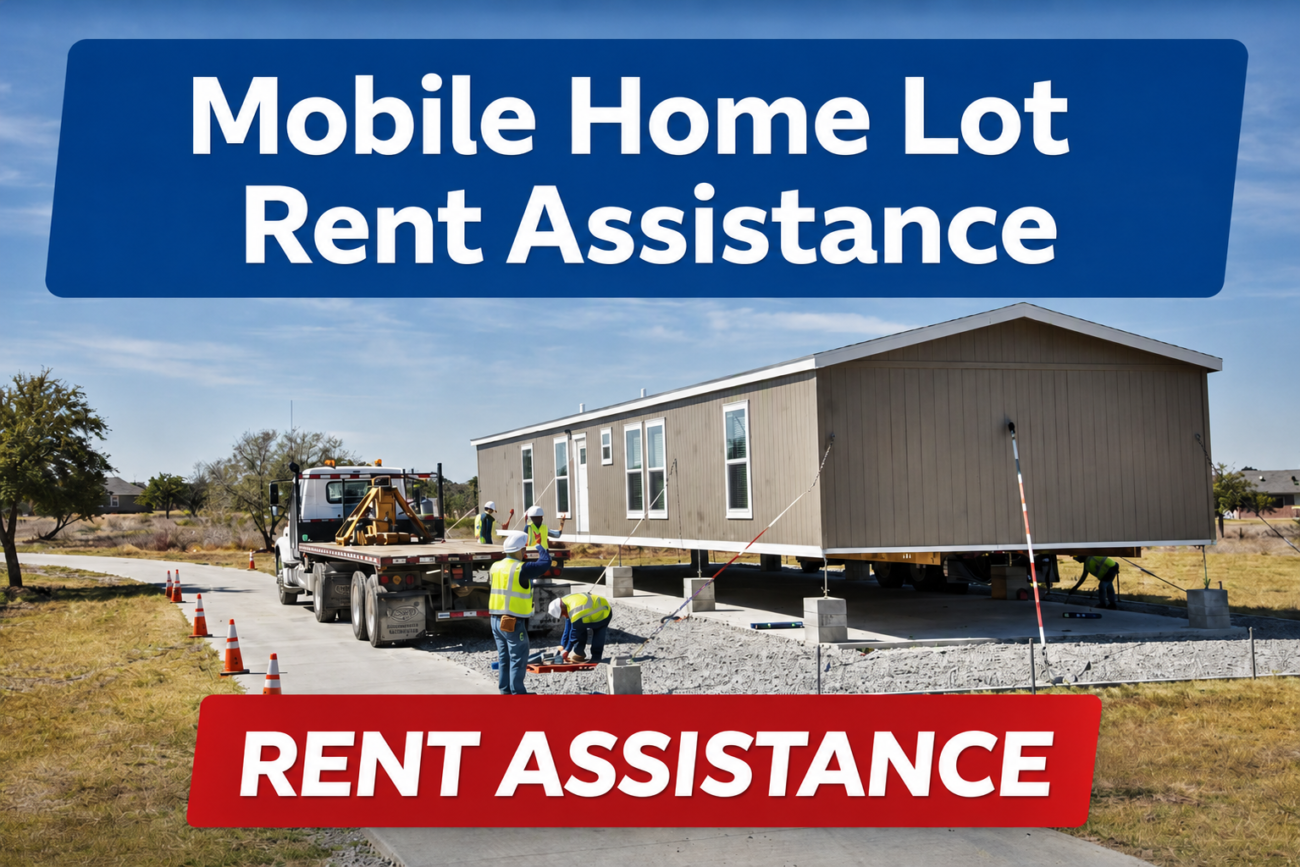
Assistance for mobile home lot rent is available through government programs, private park initiatives, and national charitable organizations; however, options may vary depending on whether you own the mobile home or rent it. Since mobile homes are typically classified as personal property rather than real estate, standard rental assistance rules apply differently to the land they occupy.
Government Programs
HUD Section 8 Housing Choice Vouchers
Under Section 8(o)(12) of the United States Housing Act, families who own a mobile home but rent the land may use a Section 8 Housing Choice Voucher (HCV) to pay the rent for the lot. While standard vouchers cover the combined cost of renting the structure and utilities, this special provision treats the land lease itself as an eligible housing expense.
How the subsidy is calculated
The voucher for monthly lot rent has a unique structure because you own the physical home. The Public Housing Authority (PHA) calculates the subsidy by considering three distinct components:
Lot rent: The actual base amount charged by the park owner for leasing the physical space.
Property taxes: If you are responsible for paying local property taxes or separate personal property taxes for your manufactured home, these are added to the equation.
Utility Allowance: An estimate established by the PHA to cover basic utility connections (such as water, sewer, and electricity).
Adding these three costs together yields the gross rent for the housing. The family pays approximately 30% to 40% of their adjusted monthly gross income toward this total, and the Section 8 voucher covers the remaining balance. The housing authority sends the voucher subsidy payment directly to the park owner.
Eligibility and restrictions
Home ownership required: You must legally own the mobile home structure and use it as your primary residence to qualify for lot rental assistance.
Park owner cooperation required: Park management must agree to sign a Housing Assistance Payments (HAP) contract with the PHA and accept the federal voucher funds. (Note: In states like California, “source of income” laws make it illegal for park owners to discriminate against voucher holders, but this varies nationwide.)
The site must pass inspection: Just like a traditional, site-built home, the mobile home lot and connected utility hookups must pass the PHA’s basic Housing Quality Standards (HQS) inspection.
Rental of the structure itself is not covered: If you use this specific type of voucher for land, the funds cannot be used to pay off a personal bank loan or a chattel mortgage used to purchase the mobile home itself. How to apply
Notify your caseworker: If you already have an active Section 8 voucher, you must submit a formal request to your PHA caseworker stating that you wish to use it for a space rental agreement for a manufactured home.
Submit park lease details: You must provide the housing authority with a blank copy or a draft of the park land lease, along with verifiable proof of home ownership (such as the vehicle title or a certificate of ownership).
Schedule the lot inspection: The PHA (Public Housing Authority) will coordinate a site visit with the park manager to verify that the lot meets environmental, space, and utility connection requirements.
HOPWA (Housing Opportunities for Persons with AIDS)
The Housing Opportunities for Persons with AIDS (HOPWA) program is a federal initiative administered by the U.S. Department of Housing and Urban Development (HUD), designed specifically to provide housing assistance and support services to low-income individuals living with HIV/AIDS and their families. For mobile home owners who rent the land, HUD explicitly allows HOPWA funds to be used to cover space rental costs (lot rent) where the mobile home is located.
Types of HOPWA assistance for eligible lots
Depending on the programs available through your region’s grantee, HOPWA can assist with mobile home park-related costs through two main methods:
Short-Term Rent, Mortgage, and Utility Assistance (STRMU): STRMU acts as an emergency financial intervention to prevent homelessness. It provides up to 21 weeks of assistance within a 52-week period to cover lot rent and overdue or current utility bills during a financial crisis.
Tenant-Based Rental Assistance (TBRA): TBRA is an ongoing, long-term rental subsidy, similar to a Section 8 voucher. If your local agency offers this option, it can provide ongoing monthly aid to reduce the financial burden of land rent over the long term. Strict HUD Standards for Mobile Home Assistance
To receive HOPWA assistance for a manufactured home (or mobile home), HUD guidelines require the property to meet the following criteria:
Anchored to the ground: The mobile home cannot simply rest on its wheels as if it were a highly temporary or transient vehicle (such as a motorhome or recreational vehicle in use). It must be securely anchored or stabilized on the site in accordance with local regulations.
Permanent utility connections: The home must be physically connected to permanent, functional utility lines (water, sewer, and electrical grids).
Valid land agreement: There must be a formal space rental or land lease agreement with the mobile home park or the landowner.
Eligibility Criteria
Medical documentation: At least one household member must have a documented diagnosis of HIV-positive status or AIDS.
Income limits: Generally, household income cannot exceed 80% of the Area Median Income (AMI) to receive STRMU emergency assistance, or 50% of the AMI to receive long-term housing assistance (TBRA).
Payer of last resort: The HOPWA program is typically designated as a “payer of last resort.” Program staff will verify that the emergency cannot be resolved through other standard resources or your own income before allocating funds.
How to apply for assistance
Since HUD distributes HOPWA funds directly as grants to local municipal governments, state agencies, and regional non-profit organizations, you must apply through the local program sponsor or an AIDS Service Organization (ASO).
Find contacts in your area: Use the official HUD tool to search for HOPWA grantees or local programs and identify the specific agency managing funds in your county.
Work with a case manager: If you already have a medical or social case manager, ask them to put you in direct contact with a housing specialist or housing coordinator responsible for handling initial HOPWA applications in your area.
Homelessness prevention and emergency funds
Homelessness prevention and emergency funds provide short-term financial assistance to prevent evictions; this assistance can specifically cover mobile home lot rent. These funds are generally administered locally through a combination of federal block grants, local tax revenue, and partnerships with non-profit organizations. These organizations receive specific federal funding to prevent homelessness. You can locate the nearest office through the National Community Action Partnership.
Private & Industry Programs
Mobile Home Park Rental Assistance Program (MHPRAP)
A privately funded program backed by participating park owners that offers monthly rent subsidies directly as a credit on your bill. You can check the requirements through the Mobile Home Park Rent Assistance Program.
MHET Rent Assistance Program
Administered by the Manufactured Housing Educational Trust (MHET), this voluntary program serves low-income homeowners who have resided in their community for at least three consecutive years. You can obtain more information through the MHET Rent Assistance Program.
State-mandated space rent assistance
State-mandated space rent assistance refers to legal frameworks enacted by specific state governments that require mobile home park owners to offer direct rent subsidies or relocation compensation to low-income tenants. Since land-lease laws vary drastically by geographic location, these programs are state-specific and do not exist at the national level. In states where legal intervention exists, regulations offer significant protection to low-income or long-term manufactured homeowners who lease the land:
Delaware: Guidelines are managed directly through the Delaware Manufactured Home Owners Association (DMHOA).
California: In areas without rent control, the state uses the Manufactured Housing Educational Trust (MHET) to process interim subsidies funded by the park. You can contact them directly via the MHET contact page.
Minnesota and Washington State: These states focus their regulations primarily on park conversions and closures:
Pennsylvania: Although the imposition of direct obligations on parks is still being debated, the state actively administers the Pennsylvania Property Tax/Rent Rebate Program, which allows mobile homeowners to recover a portion of the space rent they paid during the previous year.
Community and charitable resources
211 Local Network: Dialing 2-1-1 or visiting United Way’s 211 housing webpage connects you directly with regional non-profit agencies that help cover land lease costs.
National non-profit organizations: Entities such as the Salvation Army, Catholic Charities, and local Community Action Agencies offer emergency financial assistance (one-time payments) for lot fees.
Modest Needs: Offers self-sufficiency grants—typically up to $1,000—designed to cover one-time emergency expenses, such as unexpected increases in lot rent or outstanding balances.
